


Product Categories
- Atmospheric Plasma Surface Treatment Equipment Series
- Automatic Feeding System
- Automatic Hot Melt Glue Feeding System
- Gear Pump Hot Melt Glue Machine
- Hot Melt Adhesive Coating and Laminating Machine
- Hot Melt Glue Carton Sealing Machine
- Hot Melt Glue Dispenser
- Hot Melt Glue Guns
- Hot Melt Glue Hoses
- Hot Melt Glue Machine Accessories
- Hot Melt Roller Coating Machine
- Piston Pump Hot Melt Glue Machines
- PUR Hot Melt Glue Machines
- Six-Axis Hot Melt Glue Dispensing Robot
TAG
Atmospheric Plasma Surface Treatment Equipment
Automatic Hot Melt Glue Feeding System
carton sealing machine
Coating and Laminating Machine
FM50 Hot Melt Foaming Machine
foaming
hand-push
High-Speed
Hot Melt Adhesive Machine
Hot Melt Glue Dispenser
Hot Melt Glue Dispensing Robot
Hot Melt Glue Machine
hot melt machine
hot melt roller coating machine
OSD-2205
OSD-2206
Plasma
PUR hot melt adhesive machine
PUR hot melt glue machine
Robot
roller
roller coating machine
Semi-Automatic
Six-Axis
spray
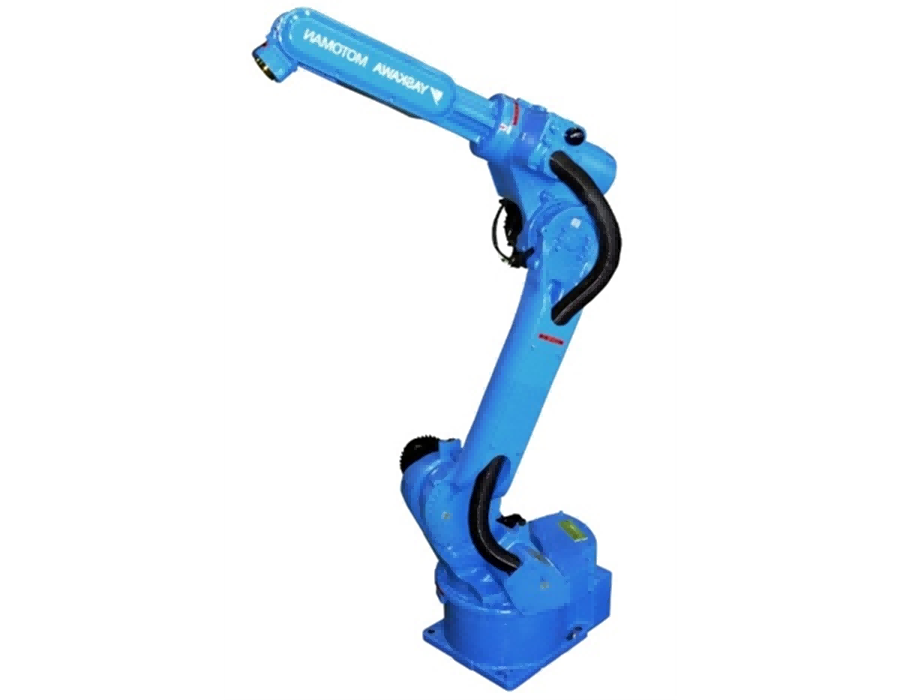
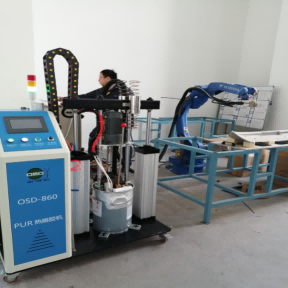
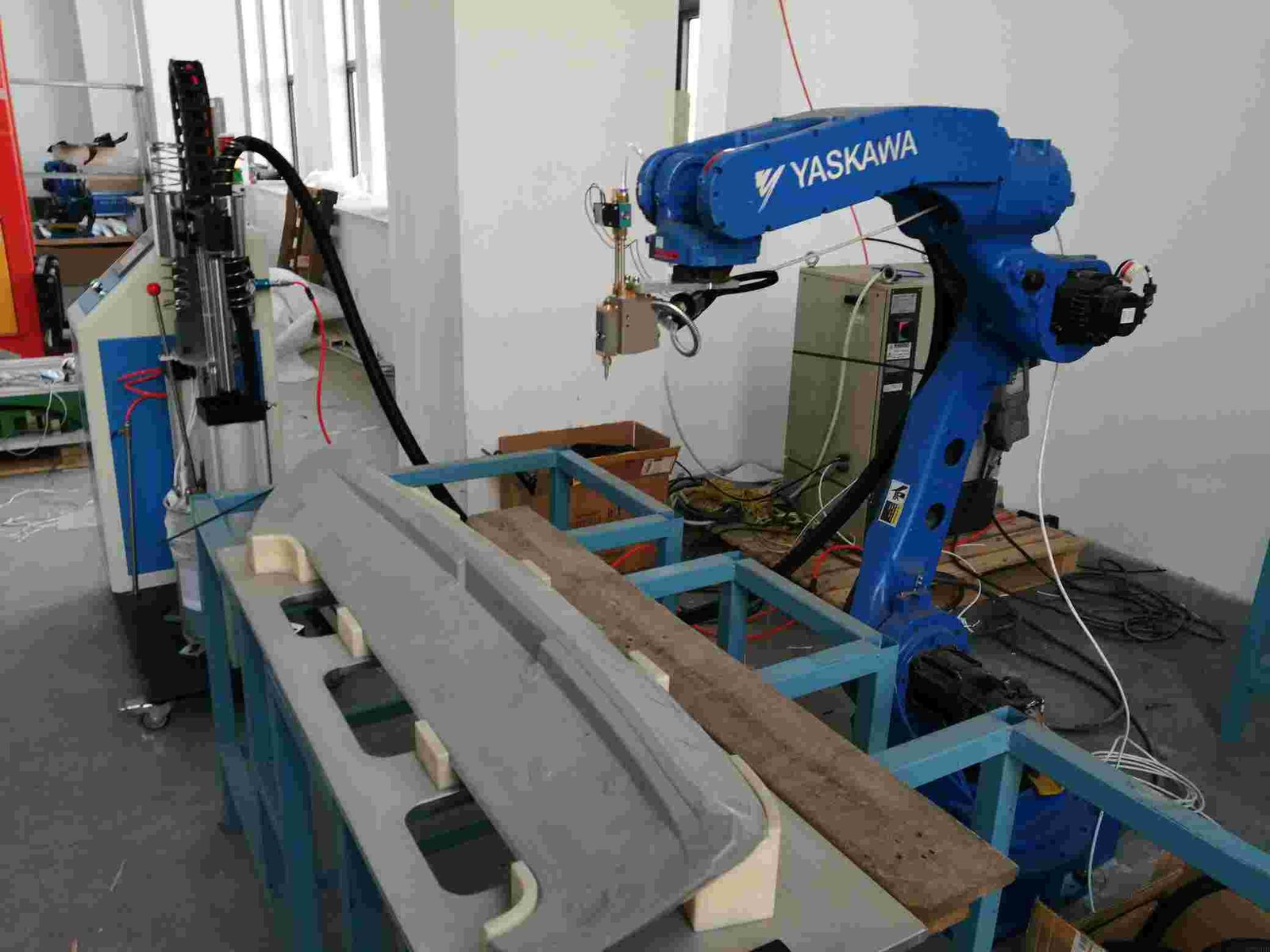


Oushida Six-Axis Hot Melt Glue Dispensing Robot Workcell
| Specification | Details |
|---|---|
| Robot structure | Six-axis vertical articulated robot |
| Maximum payload | 12 kg |
| Maximum reach | 1,527 mm |
| Repeatability | ±0.03 mm |
| Wrist protection rating | IP67 |
| Robot body protection rating | IP54 |
| Suitable processes | Hot melt spraying, dot or bead dispensing, sealing, and laminating |
| Installation | Floor-mounted or inverted |
| Supported communication | Profinet / EtherCAT / Modbus-TCP |
| Compatible glue equipment | Oushida hot melt glue machine series |
1.Industrial Robot for Hot Melt Glue Application
Many factories still apply hot melt adhesive by hand or use fixed-position glue stations. Manual application can produce inconsistent paths and glue volumes, with missed edges or excess adhesive. Fixed stations can also struggle with products that have complex shapes. A six-axis industrial robot automates the glue path and coordinates dispensing, leaving operators to load and unload parts.
Oushida’s robotic product line is designed as an integrated hot melt adhesive application solution, rather than a robot arm fitted with a glue gun. With more than ten years of hot melt equipment experience, Oushida integrates the glue valve, gear pump, temperature control, and robot motion so that glue output can follow the programmed path.
2.Six-Axis Robot Workcell Features
- Six-axis movement reaches complex surfaces and internal contours
- RTCP (Robot Tool Center Point) compensation adjusts the tool path as glue gun orientation changes
- Glue flow is synchronized with robot travel speed to help reduce gaps and excess adhesive
- Supports Profinet, EtherCAT, and Modbus-TCP industrial communication
- Automatic glue start and stop sequences help reduce stringing and dripping
- Interlocks stop the robot and trigger an alarm for abnormal temperature, pressure, low adhesive level, or communication loss
- IP67 wrist and IP54 robot body protection for suitable production environments
- Floor-mounted and inverted ceiling-mounted installation options
3.Applications
The workcell is suitable for automotive interior bonding, automotive component sealing, electronic component dispensing, appliance housing bonding, filter sealing, carton spraying, and textile or building material bonding.
4.How to Choose a Robot Workcell
Before selecting a model, confirm:
- Maximum product size, to determine the required robot reach.
- Cycle time per station, to determine whether path optimization or multiple robots are needed.
- The plant’s industrial communication system, such as Profinet, EtherCAT, or Modbus-TCP.
A six-axis robot is useful for three-dimensional surfaces, internal cavities, and changing glue gun angles. For flat, straight glue paths or simple two-dimensional patterns, a three-axis coordinate machine may be a more economical fit. For an application assessment, provide the product drawing and process requirements so the required reach and cycle time can be evaluated.
5.Six-Axis Industrial Robot for Oushida Hot Melt Glue Machines
This six-axis robot is configured for hot melt adhesive application and designed to integrate with Oushida hot melt glue equipment. It has a 12 kg maximum payload, a 1,527 mm maximum reach, and ±0.03 mm repeatability.
The robot controller communicates with Oushida glue equipment so glue output and robot movement can be coordinated. The wrist is rated IP67 and the robot body IP54. The robot supports floor-mounted or inverted installation to suit different production layouts.
RTCP Compensation and Path Control
Hot melt dispensing depends on coordinating glue flow and robot speed. If the robot moves too quickly, the glue may not keep up; if it slows down, excess adhesive can accumulate. Changes in tool orientation can also shift the glue gun’s position relative to the programmed path.
RTCP compensation calculates the tool center point as the glue gun’s position or orientation changes. This helps maintain the intended path and can reduce the need to reteach the entire path after a tool change. Actual results depend on the application, tool setup, and commissioning.
Payload and Working Reach
The 12 kg payload provides capacity for a glue gun, heated hose, heating components, cables, and other tooling. The 1,527 mm reach covers many automotive interior parts, appliance housings, and medium-sized filters. Larger products may require a longer-reach model or a coordinated multi-robot arrangement.
The robot can store separate programs for different products. Operators can select a program at the control cabinet to switch between production setups. This can be especially useful for mixed-model production.
Integrated Glue and Robot Control
The workcell coordinates glue application with robot movement. Industrial bus communication provides real-time robot speed data for adjusting gear pump output. Automatic start and stop logic starts glue delivery with the path and shuts it off at the end to help reduce excess adhesive, stringing, and dripping.
The system can also interlock with the glue machine. Abnormal temperature, pressure, adhesive level, or communication conditions can pause the robot and trigger an audible and visual alarm.
Supported industrial communication options include:
- Profinet for systems commonly used in automotive production
- EtherCAT for compatible automation controllers
- Modbus-TCP for equipment integration and retrofit projects
The appropriate communication interface should be confirmed against the plant’s PLC and control architecture.
6.Key Features
- RTCP tool center point compensation for changes in glue gun orientation
- Glue flow synchronized with robot speed to help maintain consistent application
- Profinet, EtherCAT, and Modbus-TCP communication options
- Automatic glue start and stop sequences
- Interlocks for glue temperature, pressure, adhesive level, and communication faults
- IP67 wrist protection and IP54 robot body protection
- Floor-mounted or inverted installation
- Integration with Oushida hot melt glue equipment
7.Typical Applications
- Perimeter sealing of automotive interior parts
- Bonding foam and fabric in automotive seats
- Glue application on air filter frames
- Sealant spraying on washing machine housings
- Waterproof adhesive application on electronic enclosures
- High-speed carton sealing spray applications
The workcell can help automate stations where manual application produces inconsistent results, scrap rates are high, or sustained manual glue gun operation is difficult. Automotive interiors and filter manufacturing are common use cases where consistent sealant application is important.
8.Investment and Configuration Considerations
For production lines currently using manual glue guns, Oushida estimates a potential payback period of 8–14 months for some applications with more than 500 parts per shift and scrap rates above 3%. Actual return depends on labor costs, production volume, scrap reduction, cycle time, and the final system configuration.
For flat, straight paths or simple two-dimensional patterns, a three-axis or four-axis coordinate machine may offer a better fit. A six-axis robot is most useful when the process involves three-dimensional surfaces, internal cavities, or frequent changes in product shape.
Confirm the plant’s bus communication system and PLC brand in advance so the correct communication interface can be specified.
Application & Compatibility
Which industries are Oushida hot melt adhesive machines suitable for?
Our hot‑melt equipment is widely applied across packaging, automotive manufacturing, furniture assembly, electronic component sealing, medical device production and many other sectors. Compatible with multiple adhesive types, it reliably fulfills diverse bonding application requirements.
How do I choose the right model for my needs?
Model selection depends on key factors including adhesive output (low‑volume dispensing or high‑volume spraying), operating temperature range, and production conditions (continuous or intermittent operation). Feel free to reach out to our technical specialists via email or phone for a tailored solution.
Are the machines compatible with automated production lines?
Yes. Oushida machines come with standard interfaces, enabling seamless integration with robotic arms, conveyor belts and other automated production systems.
Maintenance & After‑sales
What routine maintenance is required?
Daily: Clear residual adhesive inside the glue tank.
Monthly: Carry out inspection on filters and sealing components.
Periodically: Replace wear‑prone spare parts such as gear pumps. We offer complimentary maintenance training upon your request.
Order & Delivery
What is the lead time after placing an order?
Standard models: Shipment within 48 hours for in‑stock units. Customized models: 5‑15 working days, subject to specific contract agreements.
Can I use my own logo or design on the product?
Certainly. We provide full‑range OEM & ODM services. Your custom logo and exclusive design elements can be seamlessly implemented onto our machines.
Do you have your own factory?
Yes, we own our manufacturing facility based in Jiangsu, China. You are warmly welcome to visit our company and production site.


